Warm, engaging educators who understand the unique learning strengths of children with Down Syndrome. Visual learning, whole-word reading, concrete maths, and social skills — sessions built around how Trisomy 21 minds genuinely learn best.
Children with Down Syndrome (Trisomy 21) have a distinctive cognitive profile: strong visual-spatial memory, genuine social motivation, and a particular ability to learn through observation and imitation. They typically have relative weaknesses in phonological processing (which affects reading by standard phonics methods), sequential memory, and expressive language. Teaching that ignores this profile and uses generic methods will underdeliver; teaching that builds on visual strengths and compensates for phonological weaknesses produces remarkable results.
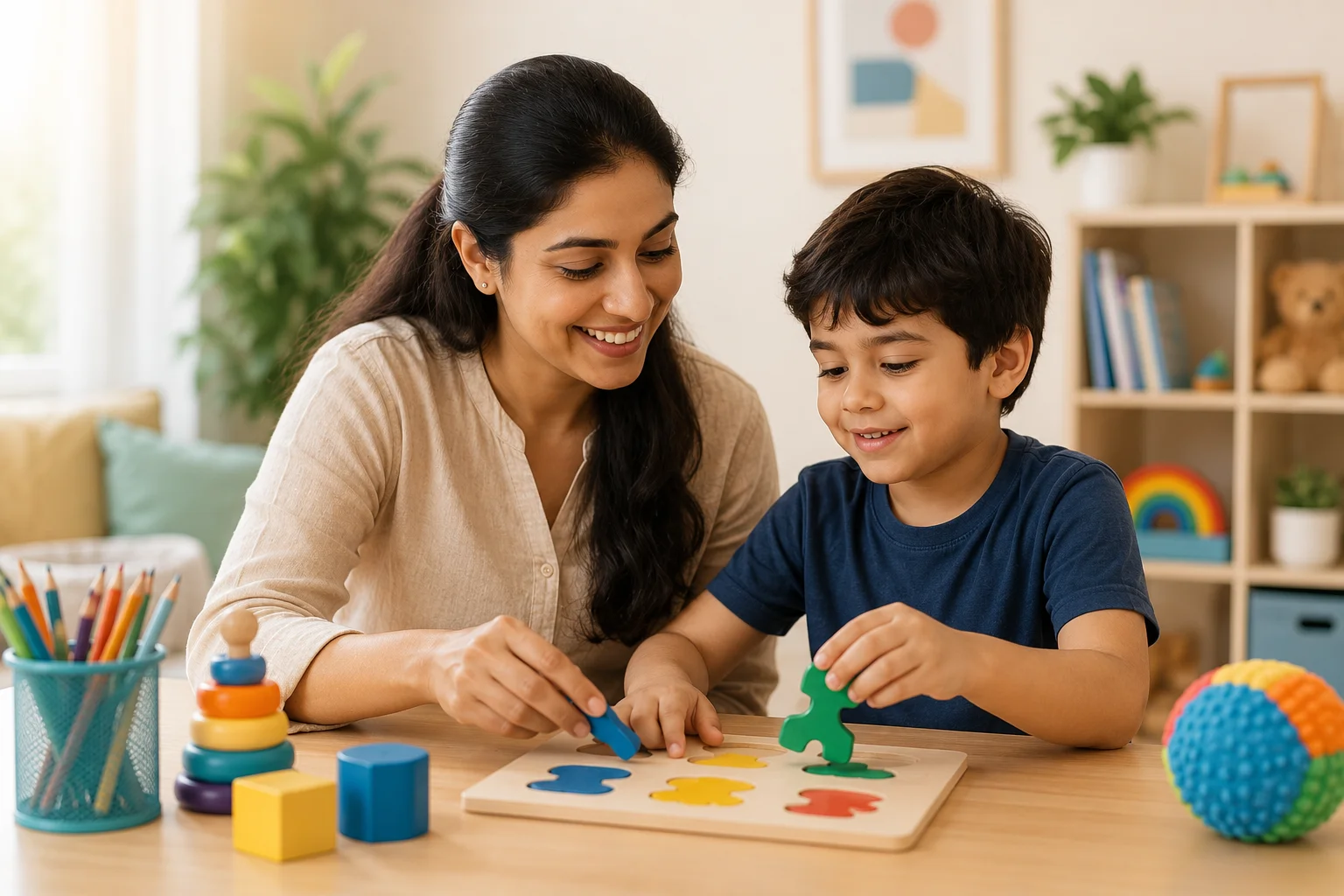
Our tutors use whole-word (sight word) reading programmes — where children learn to recognise whole words visually before phonics decoding is introduced. Maths is always taught concretely first: physical objects, counting frames, visual number lines, and money — before any abstract representation. Social stories and visual schedules are used to build social understanding and routine compliance, leveraging the natural social strength of most DS children.
We also work closely with the child's speech and language therapist, since expressive language delay is extremely common in Down Syndrome and directly affects academic participation. Tutors adapt questioning and response formats — visual choices, gesture, picture pointing — so that language delay never becomes a barrier to demonstrating genuine understanding.
All concepts presented visually — sight words, picture maths, graphic organisers, and visual routines before any abstract work.
Sight word reading programmes like Dolch and custom Hindi sight words that leverage visual memory strength.
Counting objects, sorting, measuring, and money work before any abstract arithmetic — matching how DS brains process quantity.
Sessions adapted for expressive language delays — picture choices, gesture, visual prompts, and coordination with speech therapists.
Social stories, role play, and community practice sessions that build real-world interaction skills using DS children's social motivation.
Songs, rhymes, and movement activities that leverage memory through rhythm — particularly effective for children with Down Syndrome.
Share your child's details and our team will personally match you with 1–3 tutors who have specific experience with your child's needs. No automated listings — a human reviews every request.
Free consultation · We call within 30 minutes
Certified, background-checked, and compassionate
Everything parents ask before getting started
Every child learns differently. Our certified special educators meet your child exactly where they are — no judgment, no rush, just real progress.